
What does IR (Infrared radiation) have to do with reptiles?
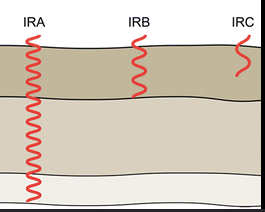
Understanding heat waves is vital for reptile keepers. Reptiles lack the internal ability to generate body heat and must rely on environmental temperatures to regulate their metabolism and biological functions.
In this guide, we will break down the types of Infrared (IR) radiation, how they appear in the wild, and how we can best simulate them in a captive environment.
The Spectrum of Solar Energy
The sun emits a broad spectrum of energy, including UVA, UVB, and three distinct types of heat waves: IR-A, IR-B, and IR-C. In the hobby, we simulate these using various heating elements.
What is the difference between these waves?
IR-A (Near-Infrared | 780–1400 nm): These are shortwave, high-energy rays that provide the deepest tissue penetration.
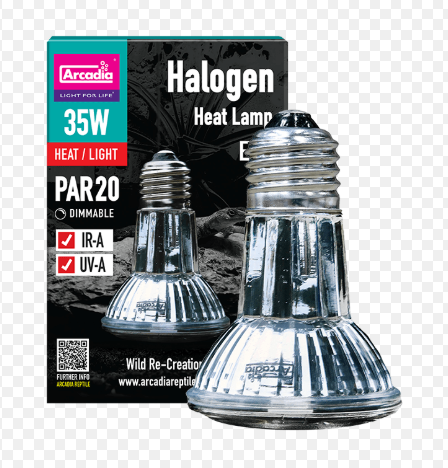
Source: Light-producing heat bulbs (e.g., Halogen flood lamps from brands like Arcadia, Zoo Med, or Exo Terra).
IR-B (Mid-Infrared | 1400–3000 nm): Medium-wavelength heat that penetrates into the upper dermis layers.
Source: Deep Heat Projectors (DHP).
IR-C (Far-Infrared | 3000 nm–1 mm): Long-wave, low-energy heat that only affects the surface of the skin.
Source: Ceramic Heat Emitters (CHE), Radiant Heat Panels (RHP), and heat mats/tape.
Which wave is best for my reptile?
For optimal health, IR-A is the gold standard. It mimics the "sun-basking" experience by heating the animal's core rather than just the surface of their scales. Deep tissue heating promotes:
Efficient digestion and nutrient absorption.
Increased activity levels and natural behaviors.
Long-term health and longevity.
Thermal gradients
Now that we understand heat waves, let's dive into thermal gradients. A thermal gradient is a range of temperatures—from a hot, basking side to a cooler side—that allows reptiles to regulate their body temperature, supporting digestion, immunity, and activity.
Here is what that gradient looks like inside your enclosure. The basking/ hot side is represented by the red portion of the image and as we move down the enclosure temperatures begin to drop bringing us to the cool end of the enclosure.
This is same gradient applies to vertical enclosures as well with the basking/ hot spots being near the top of the enclosure and the cool side being near the base shown on one of our personal setups.
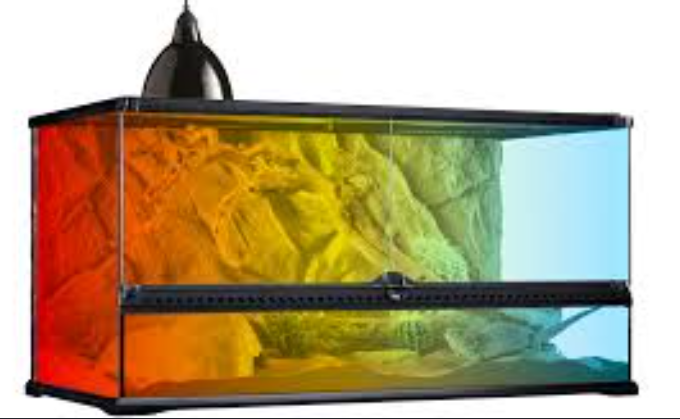
Horizontal Example
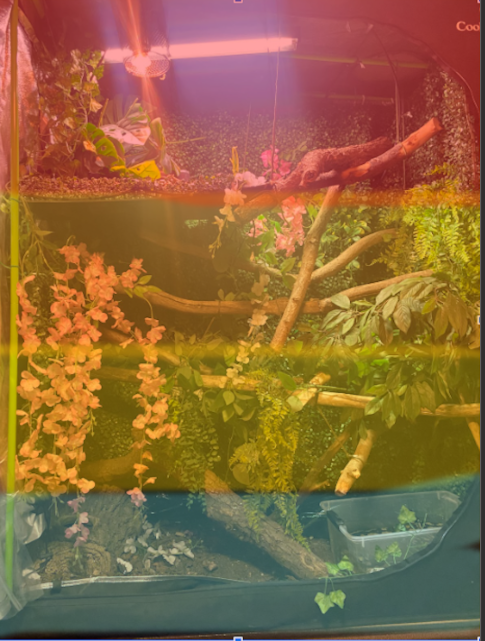
Cool spot
Hot spot